
What Is Brake Maintenance and Why It Matters
If you’ve ever wondered what is brake maintenance? and how it affects your safety every time you drive, you’re asking a question many motorists overlook until something goes wrong. Brakes quietly handle one of your car’s most important jobs, yet few drivers know what really keeps them working. In this article, we’ll uncover the essential steps that protect your brakes and why ignoring them can cost you more than you think.
Compare nearby Brake repair in Brooklyn providers.
TL;DR:
Brake maintenance is a structured process that keeps your vehicle stopping safely and reliably. It includes inspecting pads, rotors, fluid, calipers, and hardware, measuring wear and thickness, checking for leaks or damage, and verifying smooth component movement. A final performance test confirms proper braking force, balance, and pedal feel before the vehicle is considered safe to drive.
How Does a Brake Inspection Work?
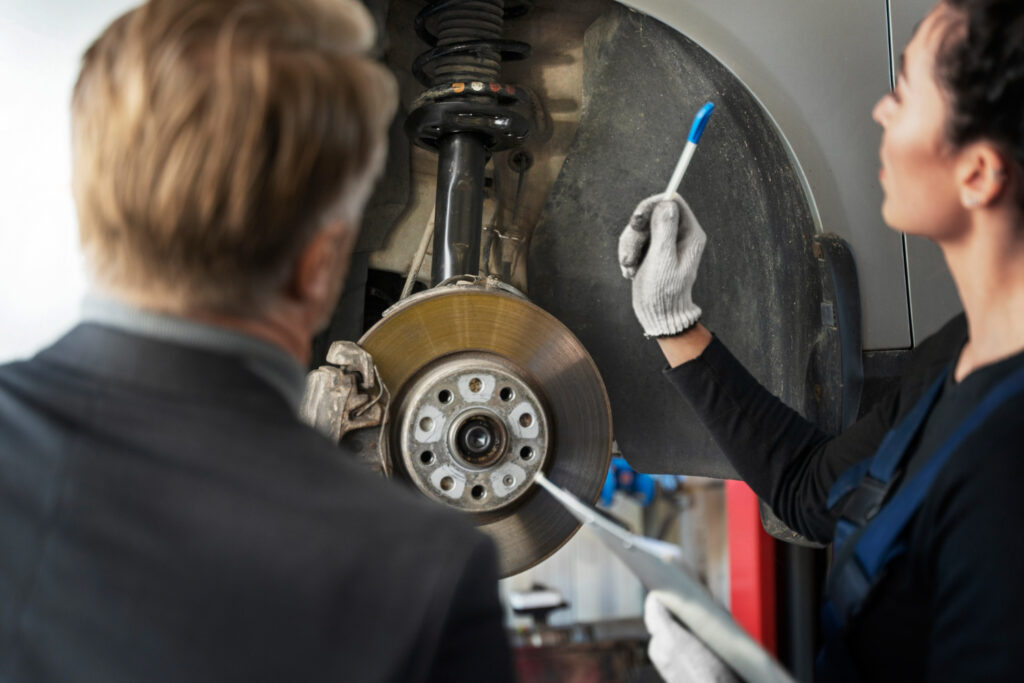
A professional inspection is a structured process that ensures the braking system can stop the vehicle safely and consistently. It begins with a visual walk-around to spot issues like leaks, uneven wear, or damaged components. If needed, the wheels are removed so a technician can measure pad thickness, rotor thickness, and rotor run-out, which are essential indicators of brake condition.
The inspection continues with checks of the hydraulic or pneumatic lines and the fluid. Technicians also inspect the calipers, slide pins, and related hardware to ensure proper movement and function. A final performance test verifies braking force and balance, since visual condition alone cannot fully predict how well the brakes will perform.
Brake Pads Are Checked for Wear
During an inspection, technicians closely evaluate the condition of the brake pads, since pad health directly affects stopping distance and rotor lifespan. They measure pad thickness using manufacturer specifications or built-in wear indicators to ensure the pads remain above the safe minimum. Uneven wear, glazing, embedded debris, or any sign of metal-on-metal contact are clear indicators that replacement is needed.
Technicians also inspect the pad backing plate, anti-squeal shims, and how well the pads seat and retract. Pads that fail to retract properly can cause drag and overheating, leading to further system damage. Because worn pads can compromise rotor condition, many service procedures recommend pad replacement before rotor machining when pads are nearing specification limits.
Rotors Are Inspected for Damage
Rotors play a critical role in stopping power, so technicians perform detailed checks to ensure they are safe, smooth, and within manufacturer limits. These inspections help identify early signs of damage that can affect braking performance.
- Rotors are examined for surface scoring, deep grooves, heat-checking, and blue heat spots.
- Technicians check for warpage, often felt as pedal pulsation or steering vibration.
- Minimum thickness is measured; rotors below this limit must be replaced.
- Light irregularities may be corrected by machining, though this reduces rotor lifespan.
- Road or roller test issues lead to thickness and lateral run-out measurements for accurate diagnosis.
Brake Fluid Levels Are Measured
Fluid is essential for proper hydraulic pressure, so technicians examine both its level and condition during every brake inspection. This helps ensure the system can deliver consistent braking performance without pressure loss or fluid-related failures.
- Fluid level in the reservoir is measured, and the color/condition is checked for contamination.
- Because fluid is hygroscopic, absorbed moisture lowers its boiling point and can cause brake fade.
- Dark or degraded fluid typically requires a flush and replacement.
- Inspectors check the master cylinder, lines, hoses, and fittings for leaks or seepage.
- Internal or external leakage can reduce system pressure, so proper master cylinder operation is verified.
Calipers Are Examined for Proper Function
Calipers play a crucial role in braking performance, so technicians carefully inspect them to ensure all moving parts operate smoothly and safely. Proper caliper function is essential for even braking and preventing premature wear.
- Pistons are checked for free movement, and seals must be intact with no leaks.
- Slide pins are inspected for corrosion and proper lubrication to prevent sticking.
- Sticking calipers or seized pins can cause uneven pad wear, overheating, and continuous drag.
- Dust boots, caliper mounts, and anti-rattle hardware are examined for damage or looseness.
- Service manuals provide detailed pass/fail criteria because caliper condition directly affects balance and safety.
System Performance Is Tested for Safety
Once all components have been inspected, the final step is a performance test to confirm the system can stop the vehicle safely and predictably. Technicians evaluate braking force, balance, and pedal feel using either a controlled road test or a stationary/roller brake tester.
Road tests check for pulling, vibration, noise, or fade, while roller testers measure braking torque at each axle to calculate overall balance.
For commercial vehicles and formal inspections, performance testing is often required and documented. Technicians also scan electronic systems like ABS and brake warning circuits, addressing any fault codes that appear. If braking performance is uneven or falls below required standards, repairs must be completed and the system retested before the vehicle is approved as safe.
Key Takeaways
- Brake pads are evaluated for thickness, wear patterns, and proper movement.
Uneven wear, glazing, debris, or metal contact indicate the need for replacement, and proper pad retraction is essential to prevent drag and overheating. - Rotors are inspected for surface condition, thickness, and warpage.
Damage such as grooves, heat spots, and cracking must be addressed, and rotors below minimum thickness require replacement to maintain safe braking. - Brake fluid levels and condition are checked to ensure hydraulic reliability.
Moisture contamination lowers boiling resistance and may cause brake fade, while leaks in the hydraulic system can reduce pressure and braking performance. - Calipers and related hardware are examined to ensure smooth, balanced braking.
Free piston movement, intact seals, and lubricated slide pins prevent uneven wear and overheating, while damaged or loose hardware must be corrected. - A final performance test confirms overall braking safety.
Road or roller tests assess braking balance, pedal feel, and system responsiveness, with any issues requiring repair and retesting before the vehicle is considered safe.
FAQs:
Is brake maintenance necessary?
Yes. Maintenance is essential to ensure safe stopping performance, prevent component damage, and reduce the risk of brake failure.
What is the meaning of brake maintenance?
Maintenance refers to the inspection, testing, and servicing of the components to keep the system functioning safely and effectively.
What is the maintenance of brakes?
It includes checking pads, rotors, calipers, fluid, hydraulic lines, and overall system performance to identify wear, leaks, or safety issues.
How often should I brake maintenance?
Most systems should be inspected at regular service intervals or whenever you notice changes in braking feel, noise, or performance.
You May Also Like:
How Often to Clean Brakes? Tips for Proper Brake Maintenance
What’s the Difference Between Brake Pads and Brake Shoes?
Is it Necessary to Replace the Rotors when Replacing Brake Pads?
Reviewed by Carlos Jimenez – Mechanic