
How Do I Know If My Car Battery Needs to Be Replaced Today?
Your car started fine yesterday, so why does it hesitate today? Battery problems rarely appear without warning, but most drivers miss the signs until they’re stranded. Knowing when a battery should be replaced can save you time, money, and stress. The clues are subtle, but once you know them, they’re hard to ignore.
Check Options at Battery Service in Brooklyn.
TL;DR:
Car batteries usually show warning signs before failing completely. Common indicators include slow engine starts, dim or flickering lights, corrosion on terminals, dashboard warnings, and unreliable accessories. Battery age is critical, as most last three to five years and naturally lose capacity over time. Checking its age, inspecting for corrosion, measuring voltage, and observing start performance and lighting behavior can help identify when it should be replaced before it leaves you stranded.
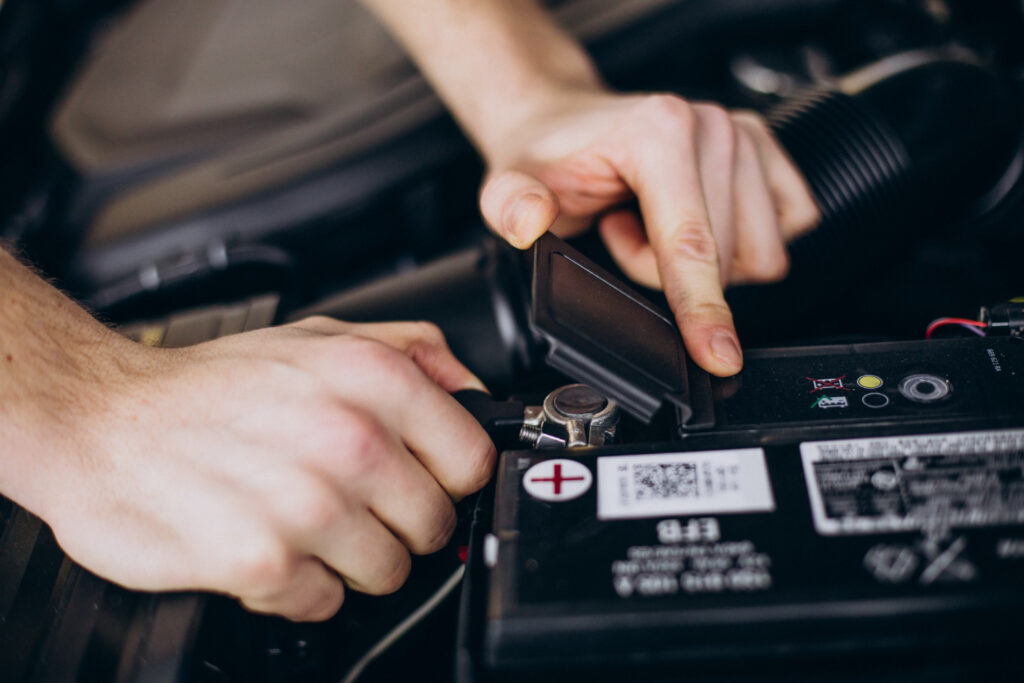
What Are the Common Signs of a Failing Car Battery?
When a car battery begins to fail, it usually gives off warning signs before it completely stops working. Recognizing these early symptoms can help prevent unexpected breakdowns, reduce the risk of affecting other vehicle systems, and allow time to replace it before it dies entirely.
Common signs include slow or difficult engine starts, dim or flickering lights, unusual smells near the battery, corrosion on its terminals, dashboard warning lights, and vehicle accessories that work inconsistently or stop functioning. These issues often appear gradually rather than all at once.
Most automotive batteries are designed to last about three to five years. Over time, normal use and chemical changes reduce their capacity. As the it weakens, it can no longer consistently supply the electrical current needed to start the engine and power vehicle systems, leading to the symptoms described above.
Checking Battery Age and Lifespan
Checking the age of your car battery is one of the easiest and most reliable ways to understand its overall condition. Even if it seems to be working fine, age alone can indicate how close it may be to failure. Most car batteries, especially traditional lead-acid batteries, are built to last about three to five years. This range can vary depending on factors like climate, driving habits, and general maintenance, but age remains an essential indicator of its health.
As it gets older, its ability to store and deliver power naturally declines. Over time, internal chemical changes reduce how efficiently it works, making it more likely to struggle with everyday demands like starting the engine or powering electrical systems.
- Why battery age matters:
It is a chemical device, and repeated charging and discharging gradually wear down its internal components. In lead-acid batteries, materials on the plates degrade and the electrolyte changes. This process, known as sulfation, reduces the battery’s ability to hold a charge and is a common cause of failure. - How to check battery age:
Most car batteries have a manufacturing date code stamped on the casing. This code allows you to estimate how long it has been in service. If the battery is older than three years, it’s a good idea to monitor it regularly with basic tests, such as voltage checks, even if no obvious problems are present. - What affects battery lifespan:
Extreme temperatures can shorten battery life. Very hot or very cold climates speed up chemical wear and increase self-discharge. In addition, frequent short trips may prevent it from fully recharging, which can further reduce its lifespan over time.
Inspecting Corrosion on Terminals
Corrosion on battery terminals is one of the easiest warning signs to spot when something isn’t right with it or its connections. It typically shows up as a powdery white, blue, or green buildup on the posts and terminal clamps, making it clearly visible during a quick inspection.
- What corrosion indicates:
Corrosion forms because of a chemical reaction between the metal terminals and the acidic environment around the battery. This reaction can be made worse by moisture or flooding caused by overcharging. As corrosion builds up, it increases electrical resistance, which limits current flow. This can make the engine harder to start and cause lights or accessories to perform poorly. - Inspection and action:
Visually inspecting it and its connections from time to time is a good habit, especially if the vehicle has been sitting unused or electrical problems have appeared. If corrosion is present, cleaning it with a proper cleaning tool or a baking soda and water solution can help restore solid electrical contact. Nevertheless, heavy or recurring corrosion may point to deeper issues, such as a leaking battery or charging system problems, and may require further testing.
Measuring Voltage and Charge Levels
Measuring voltage is one of the most reliable ways to comprehend the electrical condition, whether you’re checking it at home or in a shop. A fully charged 12-volt car battery should read about 12.6 volts or higher when the vehicle is turned off.
What the numbers mean:
Open-circuit voltage readings generally fall into these ranges:
- 12.6 volts or higher: Fully charged
- 11.9 to 12.5 volts: Partially charged
- Below 11.9 volts: Low charge and likely weak
- 10.5 volts or less: Deeply discharged or failed, and may require jump-starting and further testing
When to measure:
Voltage can be checked with a multimeter when the car is off and again while the engine is running. If the voltage does not increase to roughly 13.5–14.5 volts with the engine running, it may point to a charging system problem or a battery that is no longer able to accept a charge.
Monitoring voltage provides a more objective view of its health than visual signs alone and can help determine whether it should be recharged or replaced before it fails completely.
Testing Engine Start Performance
How your engine starts is one of the clearest indicators of its condition. When a battery can no longer deliver enough electrical current, the problem often shows up immediately during startup, affecting how the starter motor operates.
- Slow or labored cranking:
If the engine cranks slowly, hesitates, or struggles when you turn the key or press the start button, it usually means it isn’t supplying sufficient power. This may sound like a slow turning engine or repeated clicking as the starter solenoid attempts to engage. - Frequent jump-starts:
Needing a jump-start more than once is a strong sign that it can no longer hold an adequate charge to start the engine reliably. This often points to degraded internal battery plates or a significant loss of capacity.
Testing engine start performance is a practical way to assess its health because starting the vehicle places one of the highest electrical demands on the battery during normal use.
Observing Dim or Flickering Lights
A car battery helps power the vehicle’s electrical systems when the alternator can’t fully keep up, such as when the engine is off, idling, or under heavy electrical load. When it begins weakening, one of the first signs drivers often notice is dim or flickering lights.
This happens because a failing one can no longer maintain stable voltage, especially under load. As a result, headlights, interior lights, and dashboard indicators may lose brightness or fluctuate, which is often most noticeable at idle or before the engine fully starts.
Dim or flickering lights often appear along with other electrical irregularities, such as slow power windows, resetting radios, or accessories that behave inconsistently. Since modern vehicles rely on steady electrical power, these symptoms frequently show up before complete failure.
Key Takeaways.
- Battery problems usually give early warnings
Car batteries rarely fail without notice, but the signs are often subtle. Recognizing symptoms early helps prevent breakdowns, stress, and added costs. Knowing when it should be replaced allows for timely action. - Common symptoms point to declining battery power
Slow engine starts, dim or flickering lights, corrosion, warning lights, and faulty accessories are essential indicators. These issues tend to appear gradually rather than all at once. They occur as it loses its ability to supply consistent electrical current. - Battery age is a critical indicator of reliability
Most car batteries last about three to five years under normal conditions. Chemical aging and sulfation reduce their ability to hold and deliver charge. Older batteries should be monitored closely, even if they seem to work fine. - Physical inspection and voltage testing provide clear insight
Visible corrosion increases resistance and disrupts electrical flow. Voltage readings offer an objective measure of its condition and charge level. Together, these checks help identify weakness before total failure occurs. - Startup and lighting behavior reveal real-world performance issues
Starting the engine places one of the highest demands on the battery. Slow cranking, repeated jump-starts, and unstable lighting signal reduced capacity. These real-use symptoms often appear shortly before complete failure.
FAQs:
When should a battery be replaced?
It should be replaced when it shows consistent warning signs like slow engine starts, dim or flickering lights, frequent jump-starts, corrosion, or low voltage readings—especially if it’s over three years old.
When battery replacement?
Its replacement is recommended once testing shows it can no longer hold or deliver sufficient charge, or when age and symptoms indicate failure is likely soon.
Why do batteries need to be replaced?
Batteries need replacement because internal chemical changes and normal wear reduce their ability to store and supply electrical power over time.
What does replacing a battery do?
Replacing it restores reliable starting, stable voltage, and proper operation of the vehicle’s electrical systems.
You May Also Like:
Do Auto Parts Stores Change Batteries? Free Installation …
What Car Part Charges the Battery and How It Works
What Are the Best Car Battery Brands? Top List
Reviewed by Carlos Jimenez – Mechanic