
Car Overheating but Coolant Is Full: What’s the Real Problem?
Your temperature gauge is climbing, yet the reservoir shows plenty of fluid. So why is your car overheating but coolant is full? It’s a frustrating and confusing situation that many drivers face. The answer often lies deeper than the coolant level itself, and ignoring it could mean serious engine damage. Let’s uncover what’s really going on under the hood.
Reliable cooling system services available.
TL;DR:
A car can overheat even if the coolant reservoir is full because effective cooling depends on proper circulation and heat transfer, not just fluid level. Problems with the thermostat, radiator, water pump, cooling fans, or trapped air can disrupt coolant flow and cause overheating. Identifying and fixing these component failures is essential to prevent damage.
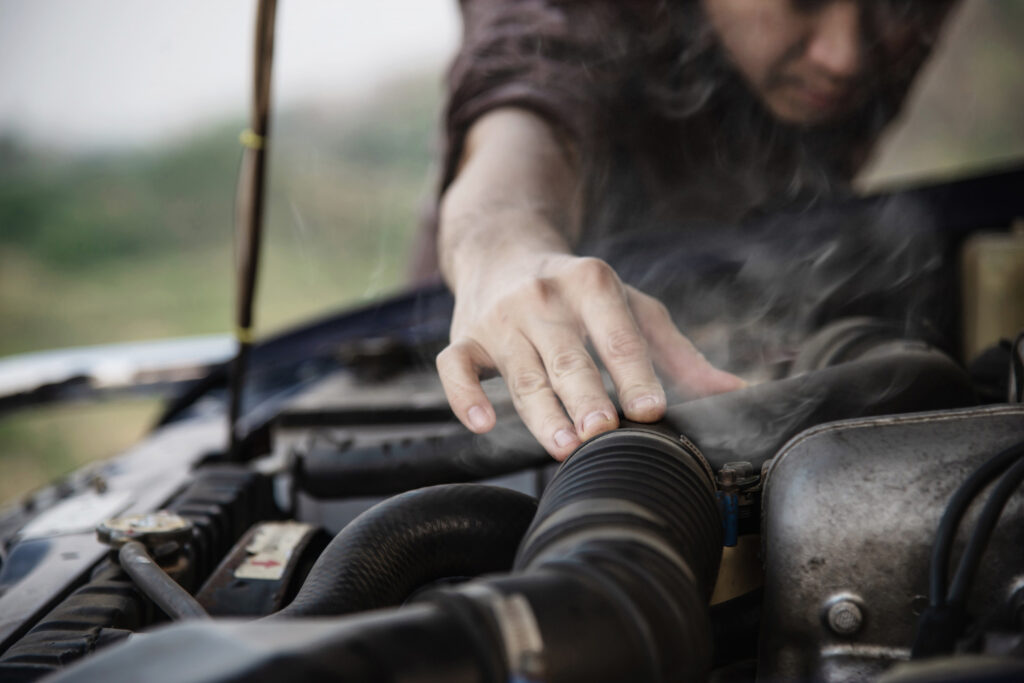
Why Is My Car Overheating With Full Coolant?
Even if the coolant reservoir appears full, your engine can still overheat. That’s because overheating is not caused solely by the amount of coolant in the system, it depends on how effectively that fluid circulates and transfers heat away from the engine.
A modern liquid-cooled internal combustion engine operates through a closed cooling circuit. In this system, a mixture of water and antifreeze absorbs heat from the motor block and travels through internal passages to the radiator, where the heat is released into the air. A water pump keeps the fluid moving, while a thermostat regulates whether coolant flows through the radiator or bypasses it based on temperature. Cooling fans help remove heat when there isn’t enough natural airflow from driving.
Nevertheless, having a full coolant level does not guarantee proper cooling performance. Components such as the thermostat, radiator, water pump, cooling fans, and even trapped air in the system must all function correctly. If any of these parts fail or don’t operate as intended, coolant may not circulate or release heat efficiently, causing the engine to overheat even though the reservoir appears full.
Check the Thermostat for Proper Opening and Closing
The thermostat is a small but essential valve in the cooling system that controls when and how much fluid flows to the radiator. When the motor is cold, the thermostat stays closed so coolant circulates only within the engine block. Once the coolant reaches a specific temperature, the thermostat opens, allowing it to pass through the radiator where heat is released.
If the thermostat sticks closed, coolant cannot reach the radiator, causing heat to remain trapped inside the engine block. This is a common reason for overheating even when the fluid level is full. On the other hand, if the thermostat sticks open, the engine may run too cool, which can reduce efficiency and lead to other performance concerns.
Possible signs of a thermostat issue include:
- A rapid temperature rise shortly after starting the engine
- Hoses that stay cold or unevenly heated
- A warm radiator while the motor continues overheating, suggesting restricted flow before the radiator
Testing usually involves checking whether the thermostat opens at the correct temperature using heat or diagnostic tools. If it does not open properly, replacement is necessary to restore proper cooling system function.
Inspect the Radiator for Blockages or Internal Damage
The radiator functions as a heat exchanger, made up of a network of tubes and fins designed to release engine heat into the surrounding air. Hot coolant flows from the motor through these internal tubes, while air passes across the external fins to remove heat before the fluid returns to the engine.
Even if the coolant level is full, the radiator may fail to cool effectively under certain conditions. Cooling performance can be reduced if:
- Internal passages are blocked by debris, rust, mineral deposits, or scale
- External fins are clogged with dirt, leaves, or insects, restricting airflow
- The radiator core is damaged or corroded, narrowing coolant flow paths
When tubes become blocked, less heat is removed from the coolant. As a result, the coolant may return to the engine still hot, contributing to overheating. In severe cases, restricted cooling can create localized hot spots, which increase the risk of motor damage.
Test the Water Pump for Proper Coolant Circulation
The water pump acts as the “heart” of the cooling system, pushing it through the engine’s internal passages and directing it toward the thermostat and radiator. If the pump is not circulating coolant properly, heat cannot be carried away from the engine, leading to rising temperatures even when coolant levels appear normal.
Several issues can affect water pump performance:
- Worn bearings or impeller deterioration, which reduce coolant flow
- Seal failure, causing internal or external leaks
- Drive belt problems, preventing the pump from spinning at the correct speed
When the water pump fails, circulation may slow down or stop completely. As a result, heat remains trapped in the engine block, causing rapid overheating. Signs of a failing pump can include unusual motor bay noises or visible leaking from behind the pump seal.
Examine the Cooling Fans and Electrical Connections
Cooling fans play a critical role when the vehicle isn’t moving fast enough for natural airflow to cool the radiator, such as in traffic or while idling. Many modern vehicles rely on electric cooling fans that are controlled by temperature sensors and relays to activate at the right time.
Several issues can prevent proper fan operation:
- A failed fan motor, causing the fan not to turn on
- A blown fuse or faulty relay, preventing power from reaching the fan
- A malfunctioning temperature sensor, which fails to signal the fan to activate
Look for Air Pockets in the Cooling System and Bleed Them Properly
A common cause of overheating—even when the coolant reservoir appears full—is air trapped inside the cooling system. These air pockets act like insulation, preventing fluid from properly contacting engine metal surfaces and reducing the system’s ability to transfer heat efficiently.
Air can enter the cooling system after improper filling during a coolant change, through leaks around hoses or seals, or when bleeder valves are missing or not functioning correctly. When air is present, it can create foam and bubbles that reduce water pump performance and contribute to localized hot spots within the motor.
Trapped air can also cause misleading temperature readings if the sensor is exposed to air instead of liquid coolant. Properly bleeding the cooling system, by running the engine and releasing trapped air through designed vents or bleeder screws, is essential after coolant service or repairs to restore proper circulation and cooling performance.
Key Takeaways.
- Overheating isn’t just about coolant level
A full reservoir does not guarantee proper cooling. Engine temperature depends on effective fluid circulation and heat transfer. If main components fail, overheating can occur despite adequate fluid levels. - The thermostat regulates proper coolant flow
It controls when coolant moves from the engine to the radiator. If stuck closed, heat becomes trapped in the motor block. If stuck open, engine efficiency may decrease. - Radiator and water pump issues disrupt heat removal
Blocked radiator passages or damaged fins reduce heat dissipation. A failing water pump slows or stops coolant circulation. Both problems allow heat to build up inside the engine. - Cooling fan or electrical failures reduce airflow
Fans are essential when the vehicle is idle or moving slowly. Faulty motors, relays, fuses, or sensors can prevent activation. Without airflow, the radiator cannot release heat effectively. - Air pockets can cause hidden overheating problems
Trapped air reduces heat transfer and may create motor hot spots. Air can enter through improper filling, leaks, or faulty bleeder valves. Proper bleeding restores circulation and accurate temperature readings.
FAQs:
How do you fix a car that overheats?
Fixing an overheating car involves identifying the root cause within the cooling system. This may include repairing or replacing a faulty thermostat, clearing radiator blockages, fixing a failing water pump, restoring cooling fan operation, or bleeding trapped air from the system.
Is it safe to drive a car that is overheating?
No. Continuing to drive while the engine is overheating can lead to serious engine damage, especially if heat is not being properly dissipated.
What is the most common cause of car overheating?
A common cause is a malfunctioning thermostat that restricts coolant flow, even when the level appears full.
What is the first thing you check when a car is overheating?
First, verify that the cooling system components are functioning properly, especially coolant circulation through the thermostat, radiator, water pump, and cooling fans.
You May Also Like:
Engine Cooling System Service: Why It’s Essential for Your Car
Why Is My Engine Cooling System Light On? Causes and Solutions
How Engine Cooling System Works to Prevent Overheating
Reviewed by Carlos Jimenez – Mechanic