
What Are the Best Car Battery Brands? Top List
If you’ve been wondering what are the best car battery brands?, you might think it’s as simple as picking a well-known name. But the truth is, battery performance, lifespan, and reliability vary far more than most drivers realize. Before you spend money on a replacement, discover the hidden factors that separate average batteries from the ones that truly deliver, your engine might depend on it.
Find experts for car battery replacement in Brooklyn.
TL;DR:
Car battery quality varies widely, and choosing the right brand means understanding lifespan, performance ratings, and warranty details. Starter batteries usually last 3–5 years, while EV traction batteries last 12–15 years thanks to better chemistry and thermal management. Comparing brands requires checking CCA, reserve capacity, construction type, degradation data, and BMS quality. Always match manufacturer specs and review warranty terms carefully, since coverage differs and doesn’t guarantee actual lifespan.
How Long Do Top Car Batteries Usually Last?
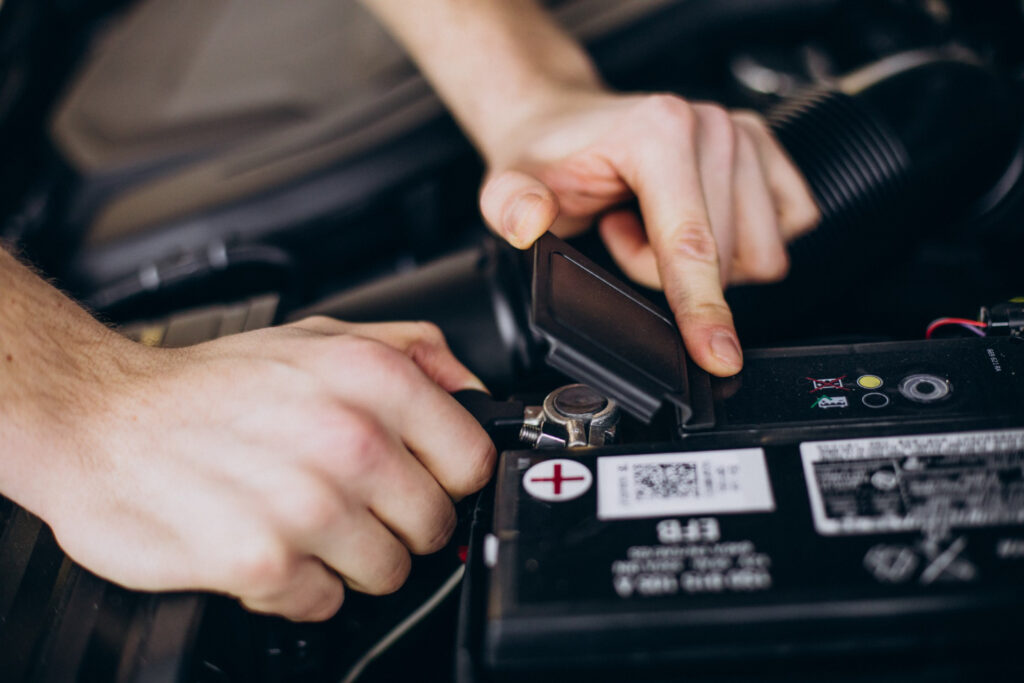
Battery lifespan starts with recognizing that not all car batteries are built for the same purpose, which is why their durability varies so widely.
The 12-volt starter battery typically lasts 3–5 years under normal conditions. Nevertheless, harsh environments, deep discharges, frequent short trips, or long periods without charging can shorten its life to 1–2 years. These batteries are designed for quick bursts of power rather than repeated cycling, which limits their overall longevity.
In contrast, an EV traction battery is engineered for long service life. Government analyses commonly estimate 12–15 years of useful life in moderate climates, with warranties often covering about 8 years or 100,000 miles. Real-world data shows many EV packs maintaining strong capacity beyond that, with plenty of vehicles still performing well past 10 years.
The major difference comes down to chemistry and engineering. Starter batteries prioritize short, high-current output, while EV lithium packs feature advanced battery-management systems and thermal controls that reduce wear, allowing them to last far longer under typical use.
Comparing Performance and Reliability of Popular Battery Brands
When evaluating battery brands performance and reliability come down to how well a battery delivers power, how consistently it performs over time, and how often it fails in real-world use. Key factors include failure rates, reserve capacity, cold-starting ability, charge acceptance, and overall manufacturer quality control. For EVs, additional considerations such as cell chemistry, battery-management systems (BMS), and thermal design play major roles.
How to Compare Lead-Acid Starter Batteries
- Cold-Cranking Amps (CCA) & Reserve Capacity (RC): Higher CCA improves cold starts, while higher RC means longer operation if the alternator fails.
- Construction Type: AGM (Absorbed Glass Mat) designs generally handle deep cycling and heavy electrical loads better than flooded batteries.
- Test Data & Failure Rates: Independent lab tests, retailer reviews, and warranty return statistics provide insight into brand reliability.
How to Compare EV Traction Battery Systems
- Cell Chemistry & Format: Options like NMC, NCA, or LFP each have different strengths—LFP often degrades more slowly but offers lower energy density.
- Thermal Management & BMS Quality: Systems with liquid cooling and advanced battery-management software typically show slower degradation and better long-term reliability.
- Real-World Field Data: Large-scale fleet studies show EV packs tend to degrade around 1–2% per year in moderate conditions, with faster wear in high heat or with frequent fast charging.
This structured approach helps determine which brands deliver stronger long-term performance and which designs best match specific vehicle needs.
Evaluating Battery Capacity and Cold Cranking Amps
When choosing a battery capacity and cold-weather performance are two of the most important specifications to understand. These values directly affect how long a battery can supply power, how reliably a vehicle starts, and how the system performs over time.
- Capacity (Ah / usable kWh)
Starter batteries use amp-hours (Ah) to indicate how long they can deliver a low, steady current. More commonly, installers rely on reserve capacity (RC), which measures how many minutes a battery can supply 25 amps before voltage drops below a set limit, providing a clear picture of how much backup power is available during an electrical failure.
For EV traction packs, capacity is measured in kilowatt-hours (kWh). What matters most is the usable portion of that capacity, the energy the vehicle can actually draw. Because manufacturers often include protective buffers, usable capacity is slightly lower than the listed pack size, and it slowly declines with age.
- Cold Cranking Amps (CCA)
For 12-volt starter batteries, CCA is critical. It measures how many amps a fully charged battery can provide for 30 seconds at 0°F (–18°C) while maintaining a minimum voltage. OEM service information consistently stresses the importance of matching or exceeding the vehicle’s required CCA, especially for drivers in cold climates where starting loads are highest.
- How to Choose the Right Ratings
Always follow manufacturer specifications for CCA, battery group size, and overall electrical requirements. Installing a battery with insufficient CCA risks hard-start or no-start situations and puts strain on the vehicle’s electrical system.
For EVs, CCA is irrelevant, focusing instead on pack energy, real-world degradation data, and whether the pack has active thermal management, as these factors determine long-term performance and usable driving range.
Checking Warranty and Lifespan Information for Each Brand
Knowing warranty terms and expected lifespan is essential when comparing battery brands, whether you’re choosing a 12-volt starter battery or an EV traction pack. Clear warranty details help you gauge long-term value, potential replacement costs, and how well the manufacturer stands behind its product.
Warranties: What to Read Closely
Look at length and mileage coverage first. Starter batteries typically offer a mix of free-replacement and pro-rated periods, with many providing 24–48 months of full replacement. EV traction batteries usually include 8-year/100,000-mile warranties, aligning with U.S. DOE guidance that “battery warranties typically cover eight years or 100,000 miles.”
Check what’s actually covered, some warranties include capacity loss below a specified threshold (often around 70%), while others only cover complete functional failure. Also confirm whether diagnostic work or labor is included.
Interpreting the Fine Print
Starter battery warranties often switch to a pro-rated structure after the initial free-replacement period, so read the schedule to understand potential out-of-pocket costs. Ensure you meet eligibility requirements, such as proof of proper installation, correct charging systems, or adherence to maintenance schedules. Keeping receipts is essential.
Lifespan vs. Warranty Expectations
A warranty is a minimum guarantee, not an exact predictor of longevity. Lead-acid starter batteries may last shorter or longer than their coverage depending on climate and usage. EV traction packs often remain useful well past the 8-year warranty, with modeling from government and research agencies showing typical lifespans of 12–15 years in moderate climates.
Key Takeaways
- Battery lifespan varies by type.
Starter batteries typically last 3–5 years, but harsh use can reduce that to 1–2 years, while EV traction batteries commonly last 12–15 years thanks to advanced chemistry and thermal management. Their longer life is due to engineering optimized for repeated cycling rather than short bursts. - Brand performance depends on construction and engineering.
Reliability is influenced by factors like CCA, reserve capacity, AGM vs. flooded design, and real-world failure data. For EVs, cell chemistry, thermal management, and BMS quality strongly affect long-term degradation and performance. - Capacity and CCA determine functional capability.
Starter batteries rely on Ah and RC to show how long they can supply power, and CCA is essential for reliable cold-weather starts. EV packs depend on usable kWh, with performance driven by energy availability and gradual capacity loss. - Matching specifications to the vehicle is critical.
Using a battery that meets or exceeds manufacturer CCA and group-size requirements prevents no-start issues and electrical strain. EV buyers should focus on usable energy, degradation trends, and thermal control systems for consistent long-term range. - Warranties reveal long-term value, not exact lifespan.
Starter batteries often include 24–48 months of free replacement followed by pro-rated coverage, while EV traction batteries typically carry 8-year/100,000-mile warranties. These guarantee minimum performance, but many batteries can last well beyond their warranty period.
FAQs:
What kills a car battery the most?
Extreme heat, deep discharges, frequent short trips, and long periods without charging shorten a 12-volt starter battery’s lifespan the fastest.
Which type of car battery lasts longer?
EV traction batteries last much longer because they use advanced lithium chemistry, thermal management, and battery-management systems. Starter batteries generally last 3–5 years.
Can a completely dead car battery be recharged?
If a starter battery has been deeply discharged repeatedly or left uncharged for long periods, its lifespan shortens significantly. In many cases, it may not recover enough to be reliable, even after recharging.
What is the highest rated car battery?
There is no single “highest rated” battery. Performance depends on factors like CCA, reserve capacity, construction type (such as AGM), quality control, and real-world failure data, which vary across brands and vehicle needs.
You May Also Like:
Do Auto Parts Stores Change Batteries? Free Installation
Need Mechanical Parts Serviced? Here’s What to Expect
What Type of Oil Is Best for My Car?