
Car Suspension Parts Explained for Modern Vehicles
Your car may feel smooth and stable on the road, but dozens of hidden components are working together beneath it to make that possible. Many drivers never think about them, until something starts to feel off. If you’ve ever wondered about car suspension parts, comprehending these components reveals how modern vehicles maintain comfort, control, and safety.
Vehicle support with car suspension service in Brooklyn.
TL;DR:
A car suspension system connects the wheels to the chassis and helps maintain comfort, stability, and control while driving. Main components, including springs, shock absorbers, control arms, anti-roll bars, struts, and steering knuckles, work together to absorb road shocks, control movement, maintain wheel alignment, and keep tires in contact with the road for safe handling and ride comfort.
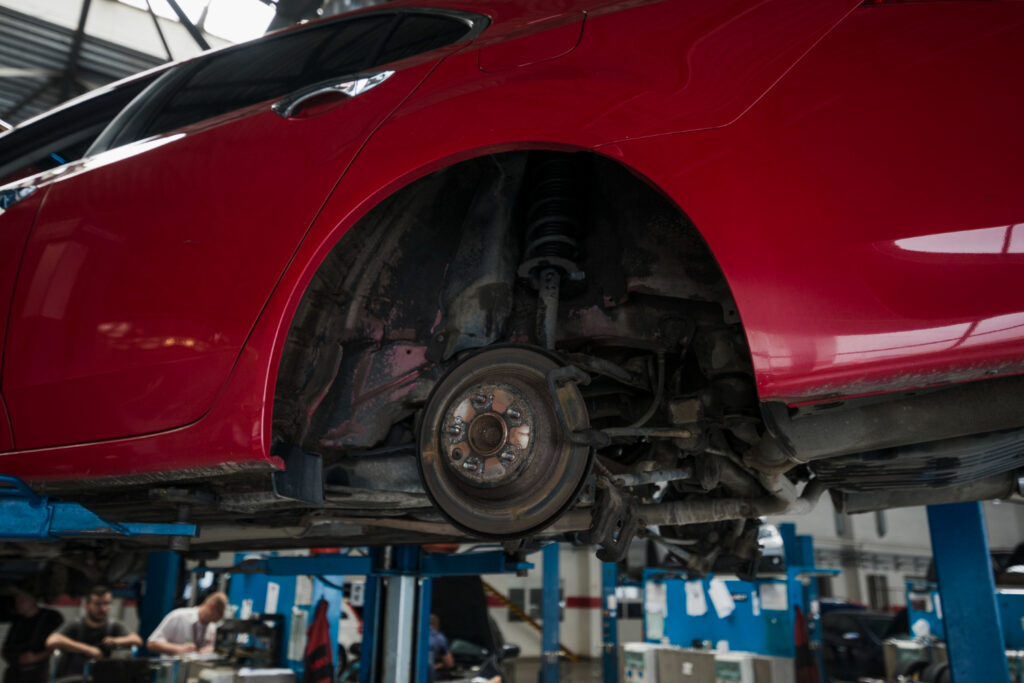
What components form a car suspension system?
A car suspension system is a mechanical assembly that connects the vehicle’s wheels to the chassis while maintaining comfort, stability, and control. Its main purpose is to absorb road shocks, keep tires in contact with the road, and support proper handling during acceleration, braking, and cornering. It also helps distribute loads and reduce vibrations that could affect passenger comfort and vehicle durability.
Most suspension systems include several interconnected components that manage forces acting on the vehicle. Essential elements include springs, shock absorbers (dampers), control arms, stabilizer bars, steering knuckles, and structural assemblies such as struts. Springs support the vehicle’s weight and store energy when encountering bumps, while dampers regulate spring movement to prevent excessive bouncing.
Structural parts such as steering knuckles and suspension links connect the wheel hub to the suspension geometry, allowing the wheel to pivot for steering while maintaining stability. Together, these components create an integrated system that balances ride comfort, vehicle control, and structural durability.
Vertical Force Absorption Through Coil and Leaf Springs
Springs absorb vertical forces created when a vehicle travels over bumps or uneven surfaces. They compress and extend to store and release energy, helping reduce the force transferred to the vehicle body.
| Spring Type | Main Function |
| Coil Springs | Compress under load and release stored energy to cushion impacts |
| Leaf Springs | Distribute loads across stacked metal strips, often used in heavier vehicles |
Both spring types support the vehicle’s weight and help maintain continuous tire contact with the road.
Oscillation Control via Hydraulic Dampening Units
After springs absorb energy, they naturally continue to oscillate. Shock absorbers regulate this motion and help stabilize the suspension.
Main functions include:
- Controlling spring movement after compression and rebound
- Reducing vibrations that could affect ride comfort
- Maintaining tire contact with the road surface
- Improving handling stability during braking or acceleration
Inside the shock absorber, a piston moves through hydraulic fluid, converting kinetic energy into heat and slowing its movement.
Geometric Alignment Management Using Control Arms
Control arms guide wheel movement and suspension geometry. They connect the vehicle frame to the steering knuckle, allowing the wheel to move vertically while remaining aligned with the chassis.
Most control arms are shaped like a wishbone or “A” design and include:
- A frame connection through bushings that allows controlled movement
- A ball joint connection to the steering knuckle for steering rotation
This structure helps maintain tire alignment, steering precision, and stable handling during suspension travel.
Lateral Stability Maintenance via Anti-Roll Bars
Anti-roll bars improve vehicle stability during cornering and uneven road conditions. They connect the systems on both sides of the vehicle and help balance forces between the wheels.
When the vehicle turns and body roll begins, the bar twists slightly and transfers load between the left and right suspension sides. This action helps the vehicle remain more level during turns and improves traction by keeping tires evenly pressed against the road surface.
Weight Distribution Management Through Struts and Knuckles
Struts and steering knuckles help manage load distribution and structural alignment within the suspension system. A strut typically combines a shock absorber and coil spring into one assembly, allowing it to perform both damping and load-bearing functions.
| Component | Role in the Suspension |
| Strut | Supports vehicle weight and helps maintain suspension alignment |
| Steering Knuckle | Connects the wheel hub, suspension links, and steering system |
Together, these parts help distribute forces throughout the suspension system while maintaining stable steering and structural integrity.
Key Takeaways.
- The suspension system connects the wheels to the vehicle and maintains stability.
It absorbs road shocks, reduces vibrations, and keeps tires in contact with the road. This helps ensure ride comfort, safe handling, and overall vehicle durability. - Several components work together to manage forces on the vehicle.
Important parts include springs, shock absorbers, control arms, stabilizer bars, struts, and steering knuckles. Together they support the vehicle’s weight and control wheel movement. - Springs absorb impacts and support the vehicle’s weight.
Coil springs compress and release energy to cushion road bumps. Leaf springs distribute loads across layered metal strips, often used in heavier vehicles. - Shock absorbers control motion and prevent excessive bouncing.
They regulate spring movement by converting kinetic energy into heat through hydraulic fluid. This reduces vibrations, improves ride comfort, and maintains tire contact with the road. - Control arms, anti-roll bars, and struts maintain alignment and stability.
Control arms guide wheel movement and preserve alignment, while anti-roll bars reduce body roll during turns. Struts and steering knuckles distribute loads and support stable steering and suspension geometry.
FAQs:
What are the parts of a car’s suspension?
The main parts of a car suspension include springs, shock absorbers (dampers), control arms, stabilizer bars, steering knuckles, and struts. These components work together to absorb road shocks, guide wheel movement, and maintain vehicle stability.
What are the 4 types of suspension?
Four common suspension spring types used in vehicles are coil springs, leaf springs, torsion bars, and air springs. Each type supports the vehicle’s weight and helps absorb impacts from uneven road surfaces.
What parts are the essentials of suspensions?
Essential suspension components include springs, shock absorbers, control arms, stabilizer bars, and structural parts like struts and steering knuckles. Together they manage wheel movement, maintain alignment, and keep the tires in contact with the road.
What suspension parts wear out first?
Parts that experience constant movement and stress, such as shock absorbers, bushings, and suspension linkages, often wear out first. When these components wear, drivers may notice increased bouncing, reduced stability, or uneven tire wear.
You May Also Like:
How to Clean Car Suspension Parts? Best Methods
Mechanical Parts Repair: Finding Services for Your Car
What Happens if I Don’t Align and Balance My Wheels?
Reviewed by Carlos Jimenez – Mechanic